Sometimes words fall short to describe an experience. Summer 2023, three trainers from The Speech Republic traveled to the Nice Place Foundation nestled in the tiny town of Loitokitok, in the heart of Maasai country. Situated on the border between Kenya and Tanzania, the town overlooks Mount Kilimanjaro in all its majestic beauty.
Our goal? To train the next cohort of future female leaders from the Maasai community.
Our client? Nice Nailantei Leng'ete, founder of Nice Place Foundation and International Postcode Lottery Ambassador in collaboration with the Friedrich Neumann Foundation.
NICE NAILANTEI LENG'ETE
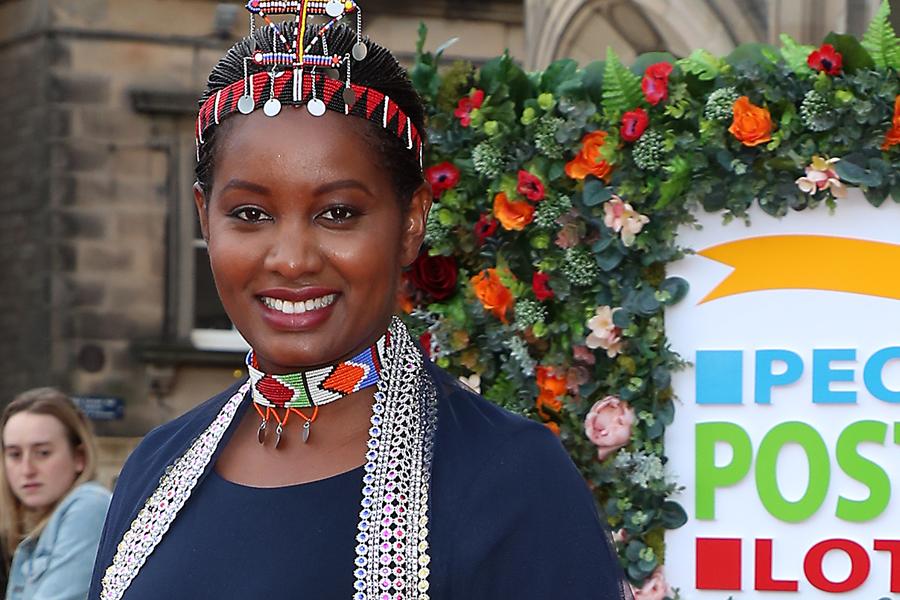
Nice Nailantei Leng'ete is the founder of Nice Place Foundation, award-winning activist and International Postcode Lottery Ambassador. Named among TIME MAGAZINE 100 most influential leaders, Nice aims at eradicating the practice of Female Genital Mutilation as a rite of passage among the Maasai community. Her Nice Place Foundation is not only a shelter for young women fleeing the cut, but also a place of education and activism. Her vision is to empower young Maasai girls to fight for an alternative rite of passage and women's rights in general.
Over 20,000 girls escaped the cut with the help of Nice Place
Nice's story is one of persistence, hope and change, as she is well respected among both male and female members of the Maasai community, and so far has helped over 20,000 girls to escape FGM.
SPEAK, ESPECIALLY WHEN NOT SPOKEN TO
The Speech Republic team worked together with a cohort of Nice Place Foundation alumni, young women who fought hard to get the opportunity to finish high school and were now ready to embark on their next adventure. Future Maasai lawyers, farmers, teachers, doctors. Young women with hopes and dreams, living in a context in which the price for these dreams can be social exclusion or worse.

The inherent strength of these young women is touching and inspiring.
It takes courage to find your voice. And then to use it.
These young women reaffirmed just how powerful a voice can be when it is used to not only speak up for oneself, but for an entire community. When it is used to challenge the status quo for the greater good. Not because they were told to, but because they found the courage to do so and in their own way - and this in a community where they are literally expected to only speak, when spoken to.
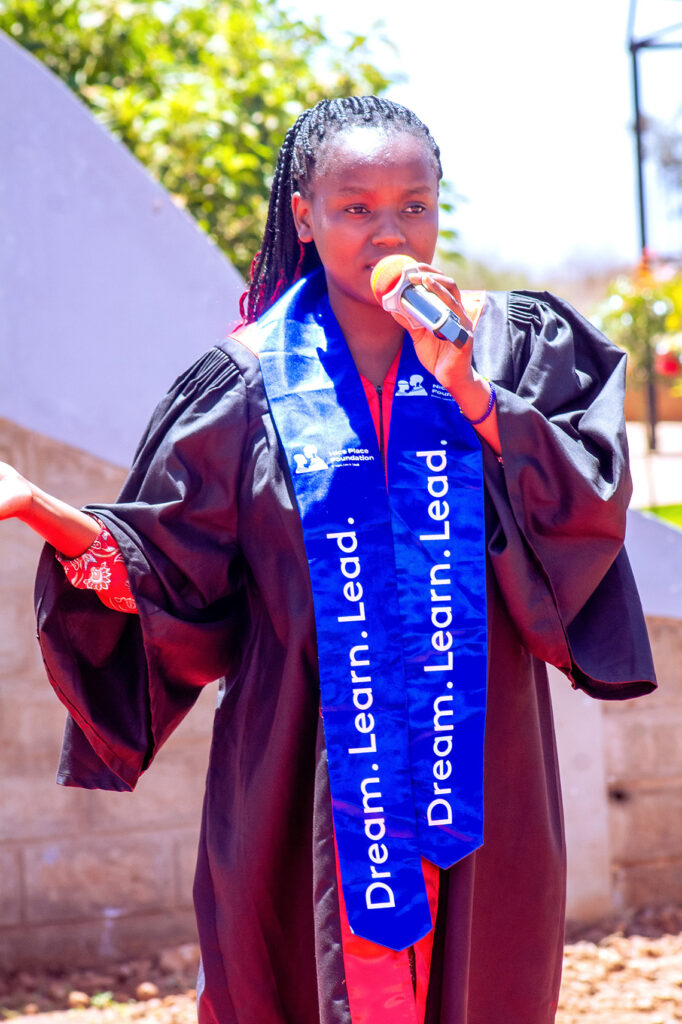
At The Speech Republic, we celebrate those who dare to speak up to change the world. Something that is more easily said than done. These young women showed us once more the courage it takes to do so. The courage to find your voice. And then to use it.
Interested in supporting Nice Place Foundation? Please take a look at www.niceplacefoundation.org
The text is set against a light background, with a curved border and a light-colored border. The border is positioned at the top of the light background. The text is aligned to the left, with a large margin on the right. The text is centered, with a light-colored border. Quisque fermentum tellus quis sollicitudin rutrum. Nullam aliquam justo vel tellus malesuada, vitae tristique eros sodales. Duis ac neque vel enim facilisis accumsan et in ipsum. Pellentesque faucibus diam in mauris accumsan interdum. Vivamus scelerisque, mauris et eleifend commodo, odio dolor posuere mi, lacinia tristique risus nisl a risus. Mauris dolor urna, pharetra in fringilla id, congue quis velit. In laoreet faucibus tellus a pharetra. Duis finibus gravida finibus. Suspendisse potenti. Aliquam congue condimentum nisl. Phasellus molestie tortor sit amet porta rhoncus. Suspendisse potenti.
The text is set against a light background, with a curved border and a light-colored border. The border is positioned at the top of the light background. The text is aligned to the left, with a large margin on the right. The text is centered, with a light-colored border. Quisque fermentum tellus quis sollicitudin rutrum. Nullam aliquam justo vel tellus malesuada, vitae tristique eros sodales. Duis ac neque vel enim facilisis accumsan et in ipsum. Pellentesque faucibus diam in mauris accumsan interdum. Vivamus scelerisque, mauris et eleifend commodo, odio dolor posuere mi, lacinia tristique risus nisl a risus. Mauris dolor urna, pharetra in fringilla id, congue quis velit. In laoreet faucibus tellus a pharetra. Duis finibus gravida finibus. Suspendisse potenti. Aliquam congue condimentum nisl. Phasellus molestie tortor sit amet porta rhoncus. Suspendisse potenti.
The text is set against a light background, with a curved border and a light-colored border. The border is positioned at the top of the light background. The text is aligned to the left, with a large margin on the right. The text is centered, with a light-colored border. Quisque fermentum tellus quis sollicitudin rutrum. Nullam aliquam justo vel tellus malesuada, vitae tristique eros sodales. Duis ac neque vel enim facilisis accumsan et in ipsum. Pellentesque faucibus diam in mauris accumsan interdum. Vivamus scelerisque, mauris et eleifend commodo, odio dolor posuere mi, lacinia tristique risus nisl a risus. Mauris dolor urna, pharetra in fringilla id, congue quis velit. In laoreet faucibus tellus a pharetra. Duis finibus gravida finibus. Suspendisse potenti. Aliquam congue condimentum nisl. Phasellus molestie tortor sit amet porta rhoncus. Suspendisse potenti.
NICE NAILANTEI LENG'ETE
Nice Nailantei Leng'ete is the founder of Nice Place Foundation, award-winning activist and International Postcode Lottery Ambassador. Named among TIME MAGAZINE 100 most influential leaders, Nice aims at eradicating the practice of Female Genital Mutilation as a rite of passage among the Maasai community. Her Nice Place Foundation is not only a shelter for young women fleeing the cut, but also a place of education and activism. Her vision is to empower young Maasai girls to fight for an alternative rite of passage and women's rights in general.
Over 20,000 girls escaped the cut with the help of Nice Place
Nice's story is one of persistence, hope and change, as she is well respected among both male and female members of the Maasai community, and so far has helped over 20,000 girls to escape FGM.
SPEAK, ESPECIALLY WHEN NOT SPOKEN TO
The Speech Republic team worked together with a cohort of Nice Place Foundation alumni, young women who fought hard to get the opportunity to finish high school and were now ready to embark on their next adventure. Future Maasai lawyers, farmers, teachers, doctors. Young women with hopes and dreams, living in a context in which the price for these dreams can be social exclusion or worse.
The inherent strength of these young women is touching and inspiring.
It takes courage to find your voice. And then to use it.
These young women reaffirmed just how powerful a voice can be when it is used to not only speak up for oneself, but for an entire community. When it is used to challenge the status quo for the greater good. Not because they were told to, but because they found the courage to do so and in their own way - and this in a community where they are literally expected to only speak, when spoken to.
At The Speech Republic, we celebrate those who dare to speak up to change the world. Something that is more easily said than done. These young women showed us once more the courage it takes to do so. The courage to find your voice. And then to use it.
Interested in supporting Nice Place Foundation? Please take a look at www.niceplacefoundation.org

So how do you ensure that your story does not become a "final hurdle" but a moment of connection and pride? Here are 4 tips in advance!
1. Celebrate the whole year, not just December
What happened in January? Who remembers that one project in April? It's amazing how quickly we forget successes. By looking back at highs as well as lows from throughout the year, you give your people something valuable: perspective. It reminds them how resilient and successful they have been together.
Tip: By reviewing your calendar from throughout the year, you will discover hidden gems. Name them, let them shine and watch pride fill the space.
2. Make it personal, and touch the audience
Authenticity is not a buzzword; it is a prerequisite. A good story starts with yourself. What has the year meant to you? Where did you feel pride? Where was the pain? People don't want generalities or platitudes. They want to hear what touched you and why. Connect on a felt level, not just on facts.
Tip: Don't simply tell them that "we all worked hard." Show what that means. Share how you experienced that one bump or breakthrough and how that defines you as a group.
3. Connect, inspire and be great
A year-end story is not a business update. It is a moment of connection. Who are you as a team? What binds you together? Especially at a time when hybrid working is the norm, physical gathering becomes rare and valuable. Use it to cultivate pride and make your people fall in love with their work, their colleagues and their organization.
Tip: Go full steam ahead. A good story is not a sparse celebration, but an ode to your journey together.
4. Plan ahead: close and reopen
You may already want to say something about plans for next year. But realize that December is about closing, not starting. December often feels like a final sprint: final tasks, tight deadlines. Don't go overboard with that. Strategy and outlook? Save those for January. After all, two weeks make a world of difference in energy. End your year with pride and vision; start the new year with decisiveness and action.
Tip: Say in December what was, and in January what is to come. Use the energy of both moments to the maximum.
With these insights, don't give a cliché talk, but an end-of-year story that really touches. Your people deserve it, and you also deserve to end this year with pride and satisfaction. Stand still, connect, inspire. Let your audience leave feeling like they are part of something bigger. Let them go into the holidays with a smile.
Working on your year-end speech?
Over the next month, we will be working with many people again to deliver an end-of-year message with impact. Would you like to work on this as well? Then contact us, and let's make your year-end speech unforgettable!
Any other tips?
Especially feel like listening further to the best tips for your year-end speech?

4 days. 7 changemakers. Dozens of inspiring stories ... with many more to come.
In February, The Speech Republic team flew to South Africa to facilitate a 'Storytelling for Social Change' training course in the heart of the country's city of gold, Johannesburg. In partnership with the Friedrich Neumann Foundation Africa, the training focused on empowering and equipping a passionate and diverse group of civil society changemakers working across human rights defense, whistleblowing, grassroots democracy and youth development, with the tools they needed to share more impactful narratives in the spaces, and with the audiences that mattered to them.
The 4-day immersive training put each participant through their paces, challenging them on all levels of their own personal communication and storytelling development.
If you see something, say something
Looking at South Africa from a historical perspective, it is clear that stories have had and continue to have the potential to create positive change, across communities and at all levels of civil society, as they can influence policy and aid in critical decision making.
As purpose-driven organizations working the civic space in South Africa these professionals showed that they were all natural storytellers and that despite working in (politically) sensitive spaces, with a lot of external scrutiny at times, that they would continue to fight on behalf of their audience - the country, and her citizens.
At the Speech Republic we actively support individuals and organizations who dedicate their time, efforts and stories to making the world a better place.
If you'd like to know more about the civil society organizations we worked with in South Africa, you can find them here:
The Helen Suzman Foundation: https://hsf.org.za/
The Third Republic: https://t3r.org.za/
PPLAAF: https://www.pplaaf.org/
The SA Schools Debating Board: https://sadebating.org/

By Maartje van Bavel
'Just. As if it takes no effort.
Five years ago I began a program, with the goal of losing many pounds. Day in and day out - for twelve weeks - I worked up a sweat. Working hard in the gym and eating only pure food. And yes! The pounds flew off. Until those twelve weeks were over...
Old habits crept back in. The gym, I was done with that for a while. And after all that hard work, I really deserved some French fries. Three months later, all the pounds had flown back on.
Fortunately, I had not yet gotten rid of my old clothes.
Fastforward, to 2024. My desire to be leaner, fitter was still there. But I didn't want another weight-loss race, but sustainable and maintainable change. So began my search for a gym that looked beyond schedules and scales. That went into depth and didn't stay on the surface in terms of approach.
Everything was scrutinized. What I was eating. Why I was eating it. What I was lacking. Where my weak moments were.
It was a long, hard road but this approach worked. I was very proud when I reached my target weight. Especially when I saw that, after three months abroad without a coach, my scale hadn't moved.
"Just" losing weight was definitely not this. A quick fix didn't help. I really needed to work on myself. And, I needed help.
Shame holds you back
Sharing this story with you feels vulnerable. There is shame in it, because: losing weight, I should "just" be able to do that, right? Other people can do it themselves, so why can't I? Why do I need help with this?
In communication, it is no different. Everyone can 'just do it. Everyone does it "just like that. And yet you need help. If there is such a thing as 'natural communication skills', you certainly don't have them.
This belief ensures that your biggest threshold is often not in communication technique. But in the recognition that you can learn something. And then a very strange thing happens. You feel that you want to get better at something, that you want to learn. But you can't just do that, you need help with that. And then shame strikes. Shame, because saying you want to get better at something means it's not good enough right now.
Change requires courage
Okay, so you're embarrassed. But still you want to do things differently.
That takes guts. Real courage.
Whether you give yourself a four, or an eight when it comes to communicating, making impact with your message, requires deepening. To practice. To development. And a willingness to become visible in the learning process. To show yourself. To be vulnerable. And that is incredibly exciting. Especially when the people around you (yourself first!) expect you to "just master" these things.
Cheese slicer level
So it becomes exciting and vulnerable, and you're not past your embarrassment either. But you do it anyway: you start looking for a communication path that suits you.
And just then, it often goes wrong.
Because we opt en masse for the quick fix. For the easy solution. The safe, bite-sized training. The fast-many-kilos-off approach. But that keeps you on the surface. You're doing a cheese slicer-level workout.
What do I mean by that? It's the training that helps you with the outside of your story. Which gives you tips on structure, on opening sentences, on metaphors. Which teaches you: always start with a compliment. Or: use a maximum of three bullet points per slide. Useful? Definitely. Effective? Somewhat.
Because let's face it. If you stay on the surface and address only what you can see, the core stays the same. The inside doesn't change.
It's like putting a lick of paint over a wall without first patching the cracks. It looks fresh, but the result is not permanent.
Many of the questions we get at The Speech Republic are at the cheese slicer level. For example, someone asked me the other day if I could teach an entire MT to give Pecha Kucha presentations (20 slides, 20 seconds per slide). Or this "Can't you just spend an hour working with my executive team so they bring the strategy story more inspiring?".
I get them, these questions. I really do. But these are the quick fixes. The band-aids. They don't solve the underlying (communication) problem. That's why I said no to everything. Because I am convinced that the real shift is not on a cheese slice, but a much deeper level.
Free yourself
Real impact is not created by using the most evocative metaphors.
Or having a beautiful PowerPoint.
Impact begins when you, the speaker, liberate something within yourself.
Only then can you become a powerful leader, because you take the stage from your strength.
Big words, "Freeing something in yourself. Because, how to do that? What is that then? What does it look like? It varies from person to person. Maybe for you it's daring to take up space. While someone else needs to stop pleasing. Sometimes it's in a phrase you heard too often as a child, "Just act normal, you'll be crazy enough," for example. Or the belief that you can't say something until you're sure of everything.
For example, I once worked with an incredibly charismatic, smart leader on her story about sustainability. But we didn't get much further, because she was whistled back by 'that voice' in her head. 'You have to do everything perfectly yourself first before you can even say anything about sustainability to others'. Don't have a worm hotel in your garden? Then you're not allowed to say anything. Don't separate all your waste? Then don't say anything. Still flying? Then you may not say anything at all. Only after we had worked on this limiting belief, this inner saboteur, did her story really fly. As did her lasting impact,
Consider this question yourself, for example, "What belief keeps me in the place just below the surface of my full power?"
First liberate, then build
You can go with the cheese slicer, but then only the outside changes. Only when you dare to change on a level deeper than that outside, does everything change.
Your story gains weight.
Your body language changes.
Your gaze becomes sharper.
Your voice lands differently.
And sure, then you can still adjust your story structure and use much better slides. But then it's all an expression of who you really are.
Authenticity is not a style. It is a consequence.
The result of hard work. Of real, deep work. Of daring to look at yourself. Of going through your shame. And, of leaving the cheese slicer in the drawer.